Swietlik Cooperative
14 Sobieskiego St. 80-216 Gdańsk
Telephone
+48 509 740 030
+48 509 740 030
biuro@swietlik.org
14 Sobieskiego St. 80-216 Gdańsk
+48 509 740 030
biuro@swietlik.org
A place where ideas turn into action surrounded by a supportive atmosphere.
...our experience enables us to thrive in any circumstances.
Sobieskiego 14 is a kind of economic hub, and the Świetlik Cooperative acts as a legal and organisational "umbrella" under which various businesses (offices, workshops or craftspeople) can share administrative costs and use shared infrastructure.
Our mission is to create a space where everyone – regardless of age, financial status or experience – can find one's place, develop passions, acquire new skills and co-create a local economy based on cooperation.
We care for the legal framework and infrastructure. We take on the risk so that your business can grow on a stable footing.
You are part of an ecosystem where looking after ethics increases the efficiency of us all.

Access to premises, contacts and projects. “Water” flows wherever initiative appears, you establish the direction of the flow.
We are abandoning rigid structures. In a pure ecosystem, complicated instructions are unnecessary.
Our activity is multidimensional.
Bring it to life with us.
We have space, knowledge, networks, experience and organisational and business infrastructure – inter alia, accounting, legal aid and formal administration.
We bring people together to launch projects that you couldn’t achieve on your own. You don’t need to own a company to do great things.
Check out the possibilities!

Flagship revitalisation and expansion project for the site at 14 Sobieskiego Street in the spirit of the circular economy.
Thanks to its modular design, the Świetlik Social and Economic Integration Centre will become a place unique on a scale in Gdańsk for residents and local artisans, where economic development proceeds at a natural pace.
This is not just a building, it is a living urban tissue designed to strengthen social bonds and stimulate the local economy.
It's a space that pays for itself, saves resources and serves every member of our housing cooperative.
RES energy
Space
Our vision is based on harmony
between human and nature, economy and society.
Intelligent rainwater management and renewable energy sources. These mean lower maintenance costs for co-op members.
Hybrid space - flexible modules combining workshops and warehouses with modern offices and retail premises.
Rooftop gardens and open courtyards that serve for water retention and are places for gathering and cultivation in the spirit of nature.
A vibrant hub of social and economic relations. It is the local community - shared values nurtured in joint initiatives.
Social and educational project "Kalejdoskop", as well as a safe Haven for Mums and an activation and support zone for seniors.
A place that is a constant point in a changing world, providing a sense of professional, personal and spiritual stability.
Intelligent rainwater management and renewable energy sources. These mean lower maintenance costs for co-op members.
Hybrid space - flexible modules combining workshops and warehouses with modern offices and retail premises.
Rooftop gardens and open courtyards that serve for water retention and are places for gathering and cultivation in the spirit of nature.
A vibrant centre of social and economic relations. This is the local community - shared values nurtured through joint initiatives.
Social and educational project "Kalejdoskop", as well as a safe Haven for Mums and an activation and support zone for seniors.
A place that is a constant point in a changing world, providing a sense of professional, personal and spiritual stability.
This is not just a building, it is a living urban tissue designed to strengthen social bonds and stimulate the local economy.
RES energy
Space
When Poland was under the partitions and in the interwar period
interwar period, rural cooperativism brought an improvement in the livelihood of its
residents. After the war, attempts were made to incorporate Poland into the one and only right
direction of collectivisation, and forcing it resulted in resentment
farmers to unionise. Therefore, after 1989 many cooperatives collapsed.
Today there is a chance for the revival of rural cooperatives and the resulting
improvement of economic conditions in rural areas.
It is also worth returning briefly to 1989. The great transformation
economic introduced a capitalist system, which in our territory
country caused the collapse of many state-owned enterprises and cooperatives. This happened due to deliberately conducted reprivatisation which falsely persuaded people that what is state-owned belongs to no one. Following war devastation, the assets were rebuilt by the entire society for a proverbial bowl of rice and belonged to all Polish citizens. Regarding the cooperatives themselves, questions must be asked:
How many coped in the new conditions and functioned in the 1990s?
How many of them did not fail immediately after the Polish markets opened up to Western ones
products?

Years | 1939 1945 1954 1981 1990
Years | 1992 1996 209 2020 2021
Want to find out more about the Świetlik Cooperative? Have questions? Or maybe you have an interesting idea and are looking for partners to collaborate with? You've come to the right place. Schedule a call.
If you are interested in cooperatives, have questions, proposals or other thoughts, call us on the telephone number +48 509 740 030. If we are unable to answer at the time, we will call you back.
Download free materials
The Co-op delivers a wide variety of diverse projects. Our common denominator is a shared commitment to health and the environment.
Discover the 7 core areas we operate in.
The essence of every cooperative's activity is economic activity. We implement our business ideas and support the entrepreneurship of Świetlik's members
We believe that community can do a great deal for health and wellbeing – from mutual aid to initiatives that improve the quality of life.
Initiatives that bring people together and support local communities – from neighbourhood cooperation to social and educational campaigns that change the environment for the better.
The Education Zone is a space for growth – workshops, training sessions and courses that support personal development and the competences of cooperative members, as well as the development of younger generations.
Rocket parts, moon-wood houses, dome houses, a cannabis centre - these are some of Świetlik's innovative projects.
Legal aid, accounting & finance, debt relief, succession.
From tech support, marketing materials, and social media, to events, communication strategies, and brand building.
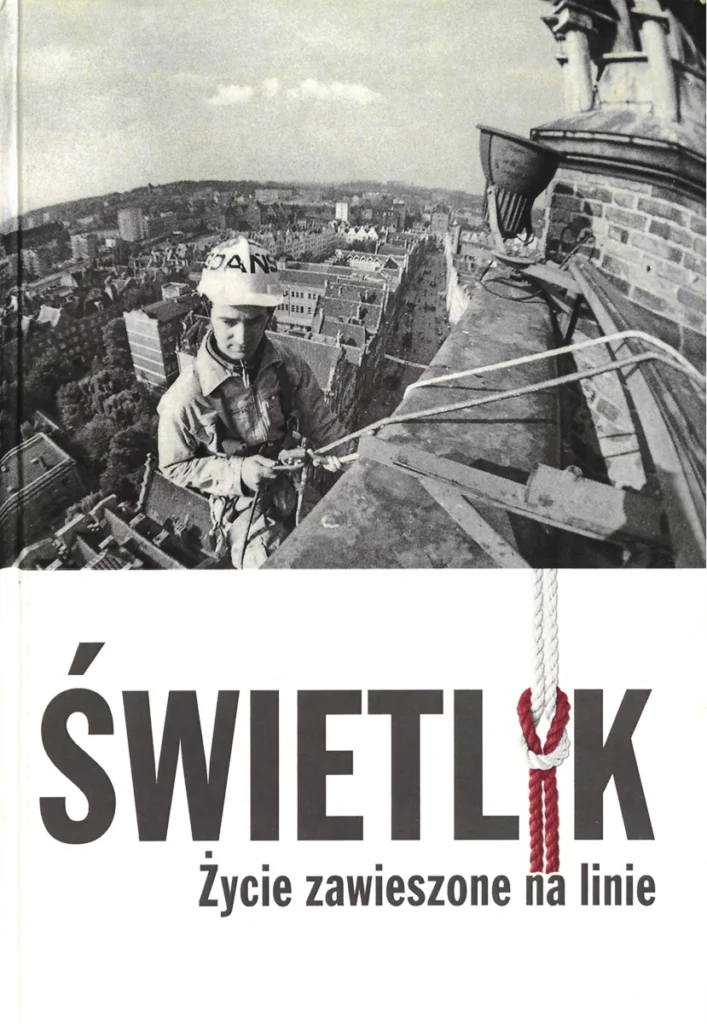
The core vision of the Świetlik Cooperative – Reactivation naturally continues the ideas of the founders who established the original Świetlik Cooperative back in 1983.
Jak napisały autorki książki „Świetlik – Życie zawieszone na linie”
Zapraszamy Was do
Film pokazuje korzeniec
Cooperatives are founded on the values of honesty, openness, social responsibility, and caring for others.
Cooperatives are founded on the values of honesty, openness, social responsibility, and caring for others.
Cooperatives are voluntary organisations, open to all persons able to use their services and willing to accept the responsibilities of membership, without gender, social, racial, political or religious discrimination.
Spółdzielnie są demokratycznymi organizacjami kontrolowanymi przez swoich członków, którzy aktywnie uczestniczą w określaniu swojej polityki i podejmowaniu decyzji. Mężczyźni i kobiety pełniący funkcje przedstawicielskie z wyboru są odpowiedzialni wobec członków. W spółdzielniach szczebla podstawowego członkowie mają równe prawa głosu (jeden członek – jeden głos), zaś spółdzielnie innych szczebli również zorganizowane są w sposób demokratyczny.
Członkowie uczestniczą w sposób sprawiedliwy w tworzeniu kapitału swojej spółdzielni i demokratycznie go kontrolują. Co najmniej część tego kapitału jest zazwyczaj wspólną własnością spółdzielni. Jeżeli członkowie otrzymują jakąś rekompensatę od kapitału wniesionego jako warunek członkostwa, jest ona zazwyczaj ograniczona. Członkowie przeznaczają nadwyżki na jeden lub wszystkie spośród następujących celów: na rozwój swojej spółdzielni, jeśli to możliwe przez stworzenie funduszu rezerwowego, z którego przynajmniej część powinna być niepodzielna; na korzyści dla członków proporcjonalnie do ich transakcji ze spółdzielnią; na wspieranie innych dziedzin działalności zaaprobowanych przez członków.
Cooperatives are autonomous, self-help organisations controlled by their members. If they enter into agreements with other organisations, including governments, or raise capital from external sources, they do so on terms that ensure democratic control by their members and maintain their cooperative autonomy.
Cooperatives provide education and training for their members, elected representatives, managers and employees so they can contribute effectively to the development of their cooperatives. They inform the general public – particularly young people and opinion leaders – about the nature and benefits of co-operation.
Cooperatives serve their members most effectively and strengthen the cooperative movement by working together through local, national, regional and international structures.
Cooperatives work for the sustainable development of their communities through policies approved by their members.
Cooperatives are voluntary organisations, open to all persons able to use their services and willing to accept the responsibilities of membership, without gender, social, racial, political or religious discrimination.
Cooperatives are democratic organisations controlled by their members, who actively participate in setting their policies and making decisions. Men and women serving as elected representatives are accountable to the membership. In primary cooperatives members have equal voting rights (one member, one vote) and cooperatives at other levels are also organised in a democratic manner.
Członkowie uczestniczą w sposób sprawiedliwy w tworzeniu kapitału swojej spółdzielni i demokratycznie go kontrolują. Co najmniej część tego kapitału jest zazwyczaj wspólną własnością spółdzielni. Jeżeli członkowie otrzymują jakąś rekompensatę od kapitału wniesionego jako warunek członkostwa, jest ona zazwyczaj ograniczona. Członkowie przeznaczają nadwyżki na jeden lub wszystkie spośród następujących celów:
Cooperatives are autonomous, self-help organisations controlled by their members. If they enter into agreements with other organisations, including governments, or raise capital from external sources, they do so on terms that ensure democratic control by their members and maintain their cooperative autonomy.
Cooperatives provide education and training for their members, elected representatives, managers and employees so they can contribute effectively to the development of their cooperatives. They inform the general public – particularly young people and opinion leaders – about the nature and benefits of co-operation.
Cooperatives provide education and training for their members, elected representatives, managers and employees so they can contribute effectively to the development of their cooperatives. They inform the general public – particularly young people and opinion leaders – about the nature and benefits of co-operation.
Cooperatives serve their members most effectively and strengthen the cooperative movement by working together through local, national, regional and international structures.
Cooperatives work for the sustainable development of their communities through policies approved by their members.
These principles serve as our compass – helping us translate cooperative values into daily actions at Świetlik.
Cooperatives are founded on the values of honesty, openness, social responsibility, and caring for others.
Cooperatives are voluntary organisations, open to all persons able to use their services and willing to accept the responsibilities of membership, without gender, social, racial, political or religious discrimination.
Cooperatives are democratic organisations controlled by their members, who actively participate in setting their policies and making decisions. Men and women serving as elected representatives are accountable to the membership. In primary cooperatives members have equal voting rights (one member, one vote) and cooperatives at other levels are also organised in a democratic manner.
Members contribute equitably to, and democratically control, the capital of their cooperative. At least part of that capital is usually the common property of the cooperative. Members usually receive limited compensation, if any, on capital subscribed as a condition of membership. Members allocate surpluses for any or all of the following purposes: developing their cooperative, possibly by setting up reserves, part of which at least would be indivisible; benefiting members in proportion to their transactions with the cooperative; and supporting other activities approved by the membership.
Cooperatives are autonomous, self-help organisations controlled by their members. If they enter into agreements with other organisations, including governments, or raise capital from external sources, they do so on terms that ensure democratic control by their members and maintain their cooperative autonomy.
Cooperatives provide education and training for their members, elected representatives, managers and employees so they can contribute effectively to the development of their cooperatives. They inform the general public – particularly young people and opinion leaders – about the nature and benefits of co-operation.
Cooperatives serve their members most effectively and strengthen the cooperative movement by working together through local, national, regional and international structures.
Cooperatives work for the sustainable development of their communities through policies approved by their members.
These principles serve as our compass – helping us translate cooperative values into daily actions at Świetlik.
Cooperatives are voluntary organisations, open to all persons able to use their services and willing to accept the responsibilities of membership, without gender, social, racial, political or religious discrimination.
Cooperatives are democratic organisations controlled by their members, who actively participate in setting their policies and making decisions. Men and women serving as elected representatives are accountable to the membership. In primary cooperatives members have equal voting rights (one member, one vote) and cooperatives at other levels are also organised in a democratic manner.
Members contribute equitably to, and democratically control, the capital of their cooperative. At least part of that capital is usually the common property of the cooperative. Members usually receive limited compensation, if any, on capital subscribed as a condition of membership. Members allocate surpluses for any or all of the following purposes: developing their cooperative, possibly by setting up reserves, part of which at least would be indivisible; benefiting members in proportion to their transactions with the cooperative; and supporting other activities approved by the membership.
Cooperatives are autonomous, self-help organisations controlled by their members. If they enter into agreements with other organisations, including governments, or raise capital from external sources, they do so on terms that ensure democratic control by their members and maintain their cooperative autonomy.
Cooperatives provide education and training for their members, elected representatives, managers and employees so they can contribute effectively to the development of their cooperatives. They inform the general public – particularly young people and opinion leaders – about the nature and benefits of co-operation.
Cooperatives serve their members most effectively and strengthen the cooperative movement by working together through local, national, regional and international structures.
Cooperatives work for the sustainable development of their communities through policies approved by their members.
These principles serve as our compass – helping us translate cooperative values into daily actions at Świetlik.